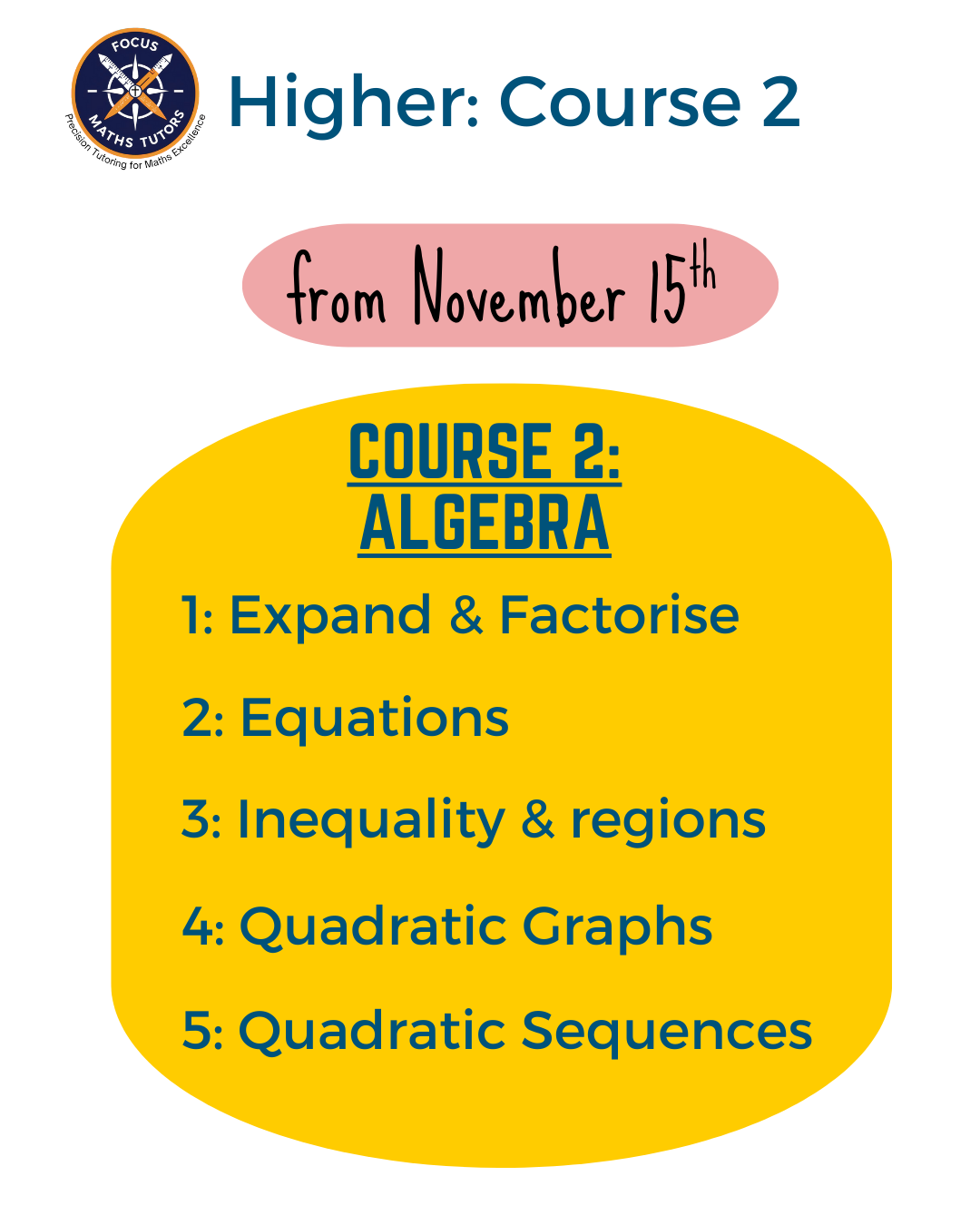
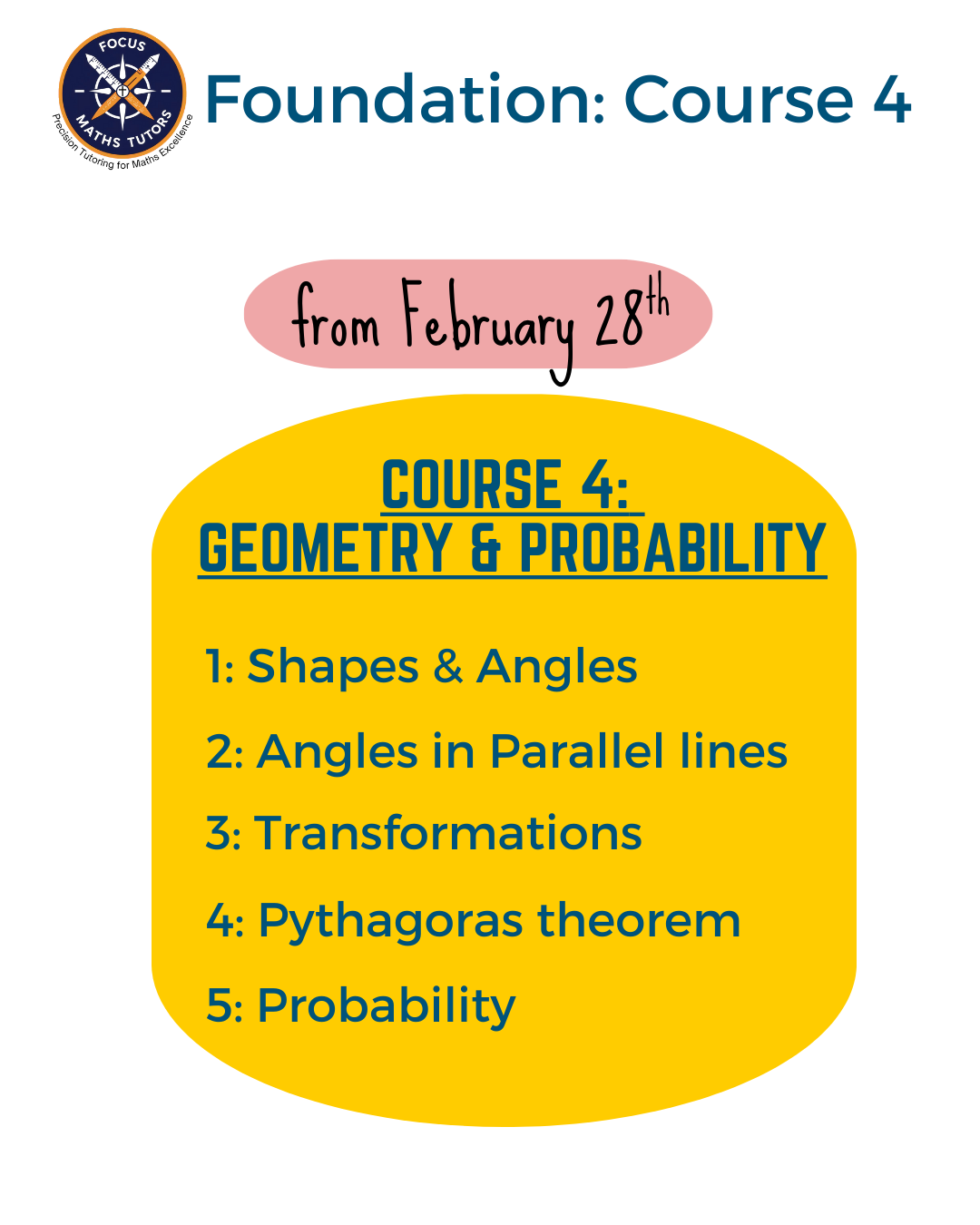
This course starts on the 28th February 2026
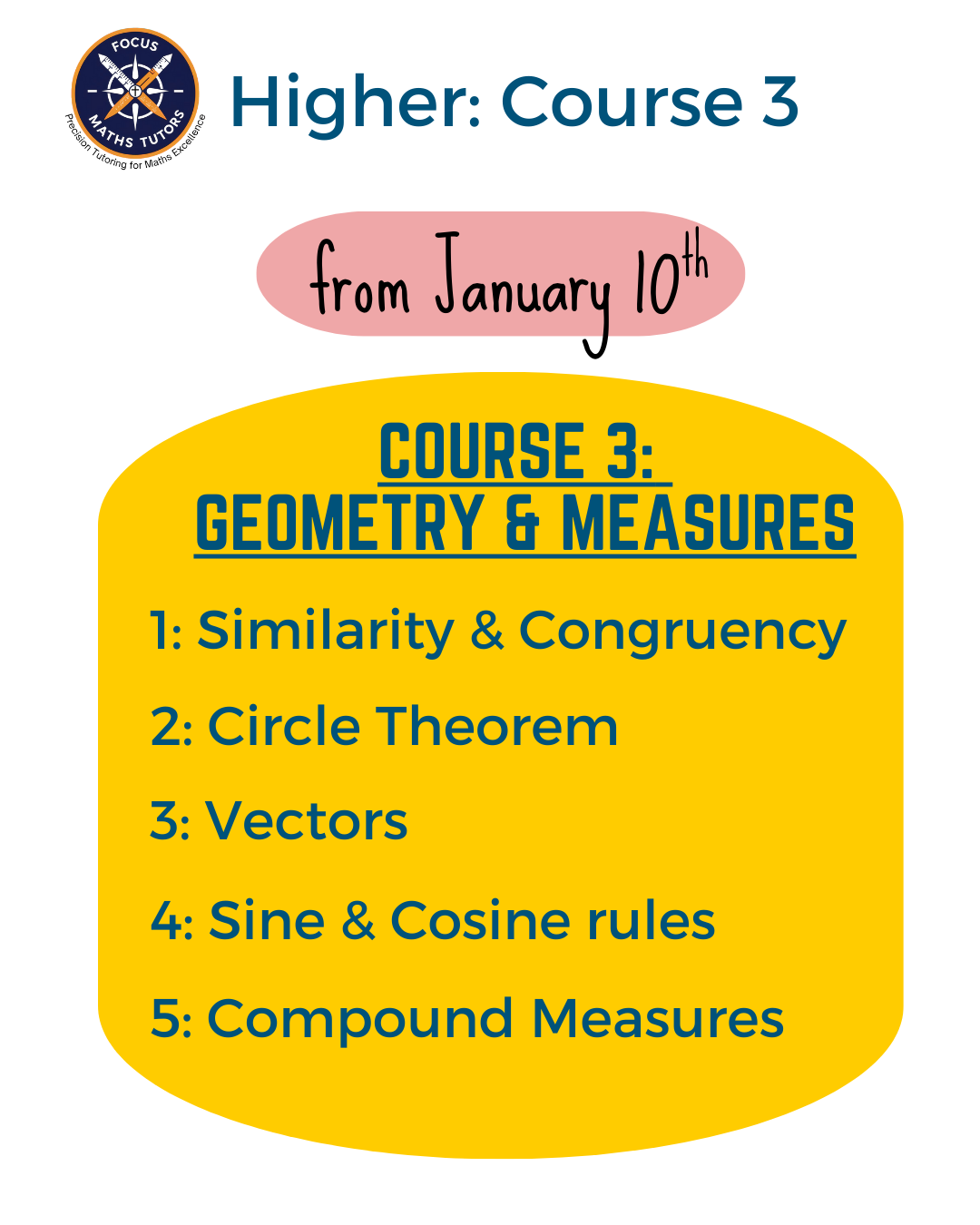
3. Geometry & Measures
01
Pythagoras' Theorem
Named after an ancient Greek mathematician, Pythagoras’ theorem remains one of maths’ most practical tools after 2,500 years.
This elegant relationship helps calculate distances, solve construction problems and optimise routes in GPS systems. Mastering it in 2D and 3D builds spatial reasoning and powerful problem-solving skills.
These techniques prepare you for advanced trigonometry and coordinate geometry, while honing the thinking used in everything from architecture and game design to navigation and engineering.
02
Trigonometry: SOH CAH TOA
From measuring building heights to plotting satellite orbits, trigonometric ratios provide sophisticated methods for solving real-world angle problems.
SOH CAH TOA becomes your go-to toolkit for right-angled triangles, essential in navigation, engineering and design.
Building fluency with these ratios sharpens spatial reasoning and sets you up for 3D geometry, while offering techniques used in video-game graphics, architectural design and even space exploration.
03
Transformations
Translation and enlargement unlock control over position and size in geometric space. Master how to translate shapes using column vectors to move them horizontally and vertically, then learn to enlarge shapes using positive and negative scale factors to resize and reposition them relative to a centre of enlargement. When you apply a negative scale factor, the image flips across the centre of enlargement—a powerful technique for creating rotational effects in a single transformation.
These skills lead directly into work on combined transformations, similarity, and congruence, giving you the geometric foundation used in computer graphics, animation, engineering design, navigation systems, and medical imaging.
04
Similarity & Scales
How do mapmakers shrink whole countries onto paper without distortion?
Similarity and scale factors are the keys to proportional relationships in geometry. Understanding these concepts helps you tackle maps, models and architectural plans with confidence. Learning how scaling affects area and volume refines your reasoning about proportions.
These skills dovetail with ratio work and advanced geometry, building the scaling intuition vital for design, engineering and mathematical modelling.
05
Compound Measures
Why does fuel efficiency use L/100 km while speed uses km/h?
Compound measures help you work with derived units in science, engineering and everyday life. Master speed, density and pressure calculations to interpret data accurately and solve practical problems.
These techniques link with formula manipulation and proportional reasoning, boosting your quantitative confidence for physics applications and real-world challenges involving rates and efficiency.
Telephone: +44 07466 980 795
E-mail: info@focusmathstutors.co.uk